 Community Support
The Second Strategic Plan (2014-2018) of Pakistan’s Election Commission has limited provisions for ensuring the political participation of persons with disabilities. A comprehensive review is required to align with the United Nations Convention on the Rights of Persons with Disabilities (UNCRPD), which obliges the state to provide adequate facilities for persons with disabilities to exercise their legal rights fully.
UNCRPD Article 29 mandates that states guarantee persons with disabilities can participate effectively and equally in political and public life. Even in complex electoral contexts, these rights must be safeguarded. In support of this, KDN organizes policy dialogues addressing the challenges faced by persons with disabilities.
Key Policy Frameworks
The Representation of the People Act safeguards the right to vote for people with disabilities by enabling them to choose attendants who will help them cast their ballots discreetly and on their own. UNCRPD Guidance: Offers guidelines and legal requirements for people with disabilities to fully participate in public and electoral processes.
Strategies to Increase Political Participation
The United Nations Convention on the Rights of Persons with Disabilities (UNCRPD) offers the legal foundation and a set of guidelines for people with disabilities to fully and equally participate in public life. Particularly pertinent to election-related actions are Articles 29 and 12. There are four interrelated tactics to boost the political engagement of people with disabilities in support of the UNCRPD's goals:
- Build the capacity of local Disabled Persons Organizations (DPOs) through training on electoral systems, governance, advocacy, and leadership.
- Support government institutions and election management bodies to establish legal frameworks and partnerships with DPOs.
- Engage DPOs in civil society coalitions to conduct voter education, awareness, and election monitoring.
- Assist political parties to meaningfully include persons with disabilities in campaigns, leadership roles, and candidate nominations.
Policy Challenges in Pakistan
Persons with disabilities face barriers such as lack of accessible voter registration, transportation to polling stations, and absence of tactile ballots or assistive voting technologies. Those with intellectual disabilities are often excluded from participation. Additionally, political parties and authorities frequently lack the initiative to facilitate inclusion or implement supportive legislation.
- Insufficient data on persons with disabilities across regions.
- Social discrimination and exclusion.
- Limited leadership opportunities and engagement.
- Inadequate capacity of election bodies to implement accessible solutions.
KDN Initiatives
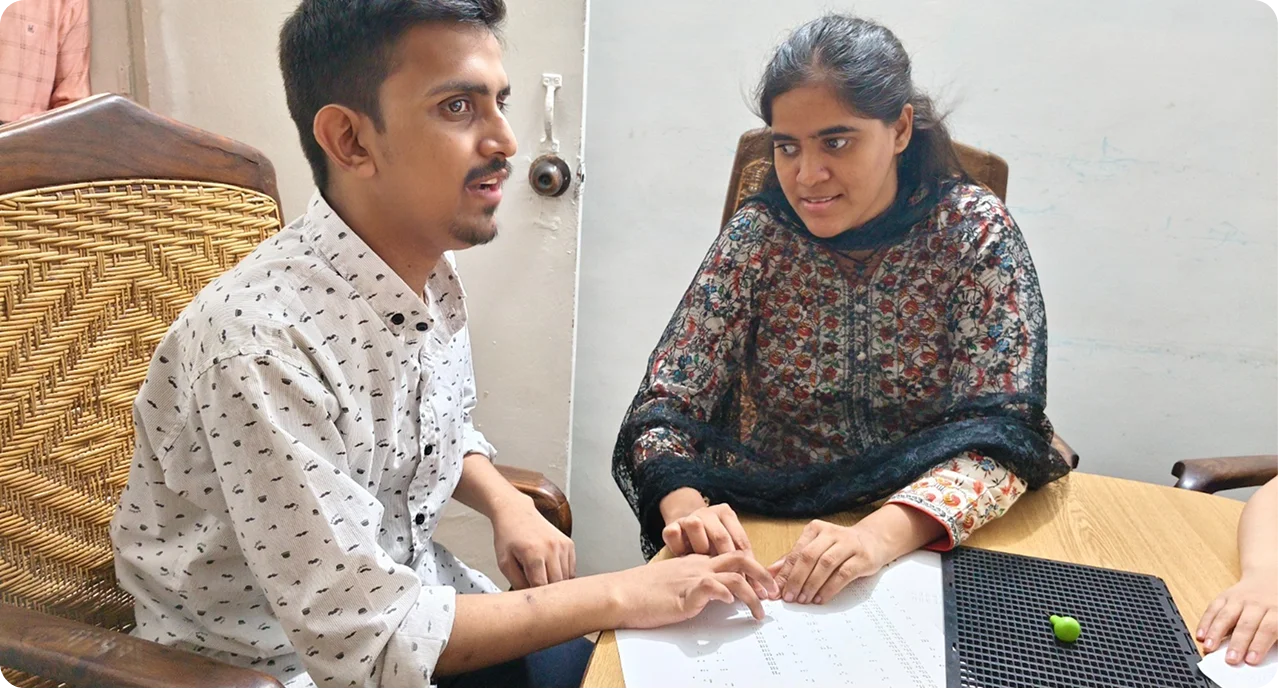
KDN has conducted workshops, scoping studies, and policy briefs on inclusive electoral participation. These efforts focus on enabling persons with disabilities, including hearing, visual, cognitive, and physically impaired individuals, to engage at every stage of the electoral process. Recommendations from these studies inform national and provincial policy dialogues to ensure future elections are as inclusive as possible.
Through research, stakeholder engagement, and capacity-building initiatives, KDN promotes actionable reforms. The organization works to remove barriers, provide practical solutions, and create an electoral environment where persons with disabilities can exercise their political rights confidently and independently.
Based on the analysis of the literature, the study provided information about the specific obstacles that people with disabilities encounter and offered ways to overcome them. In this study, a preliminary data finding was offered for comparison with other nations worldwide. This scoping research outlined a course of action for legislative changes and offered useful suggestions to ensure that the nation's upcoming elections are as inclusive as possible.